
By the Traveller team · Updated July 2026
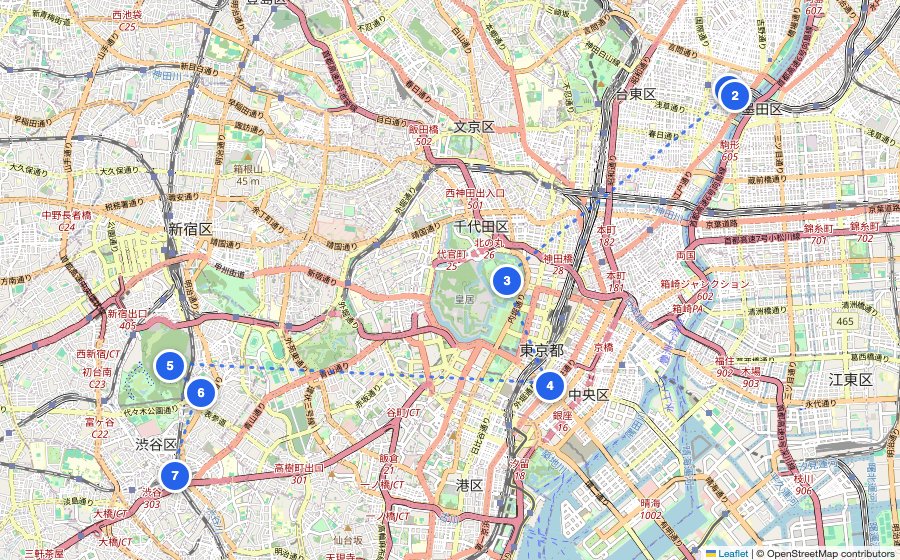
Tokyo isn't really one city to walk, it's a cluster of them, and trying to cover the whole metropolis on foot in a day is a losing game. Pick one cluster and let the train do the connecting. The Asakusa-to-Shibuya version below moves from the city's traditional, old-town feel in the morning to its neon, ultra-modern core by night, with the train filling in the one hop that's too far to walk.
Why walk Tokyo?
- Each of Tokyo's neighbourhoods is compact and walkable on its own terms — Asakusa, Ginza, and Shibuya are each dense and pedestrian-friendly in their own right.
- Walking reveals a level of order and cleanliness that's genuinely part of the city's character here, not just background noise to the sights.
- Some of the best food in Tokyo is standing-room ramen and yakitori you'd only ever find by walking past it, never by searching for it.
- Shibuya Crossing is an experience best had in the middle of it, on foot, not photographed from a café window above.
A one-day itinerary
Morning
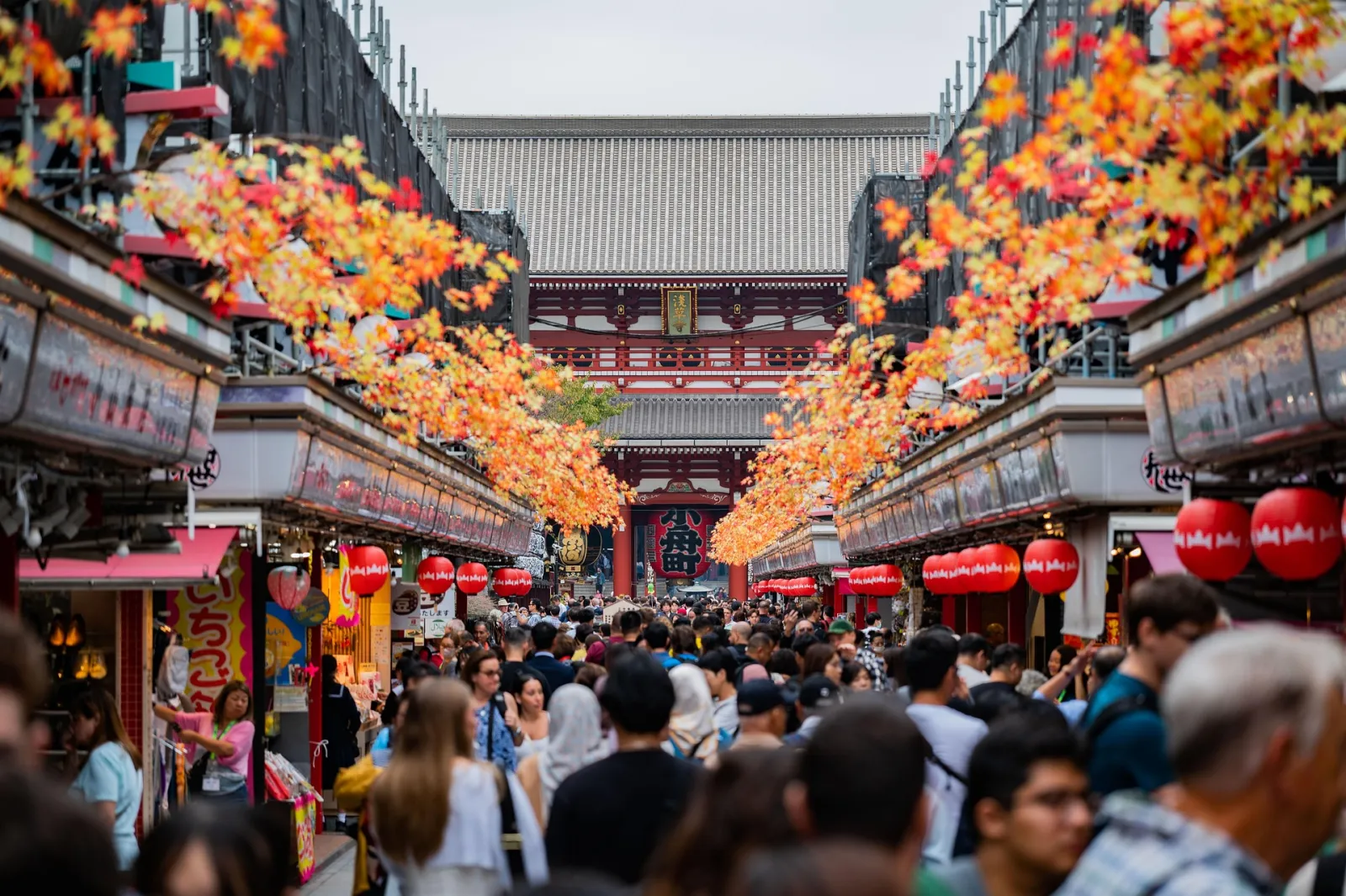
Senso-ji Temple
Tokyo's oldest temple, in the traditional Asakusa district — go early, this one gets crowded fast once the day tour groups arrive.
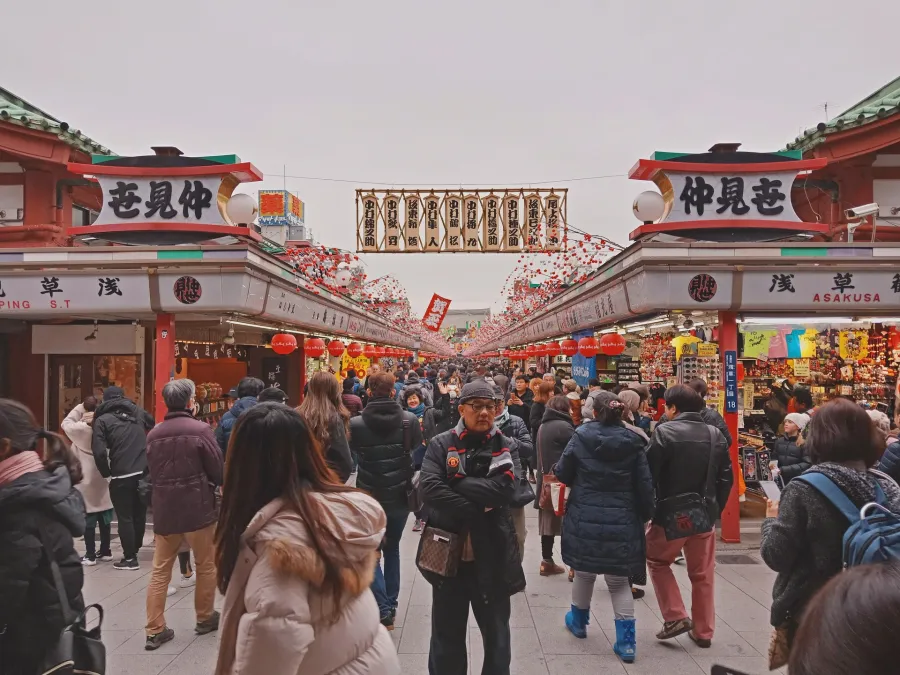
Nakamise-dori
The approach street to the temple, lined with traditional snacks and souvenirs — worth slowing down for even if you don't buy anything.
Midday
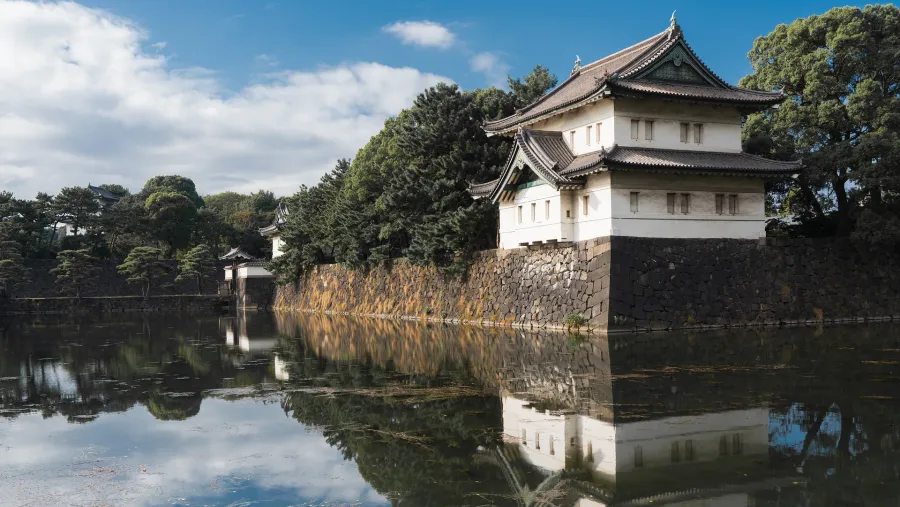
Imperial Palace East Garden
A train ride toward the centre, then a walk through the palace grounds' public gardens — a genuinely calm break in the middle of the day.
Ginza
Tokyo's upscale shopping district, and a solid lunch stop even if window-shopping is as far as your budget goes.
Afternoon
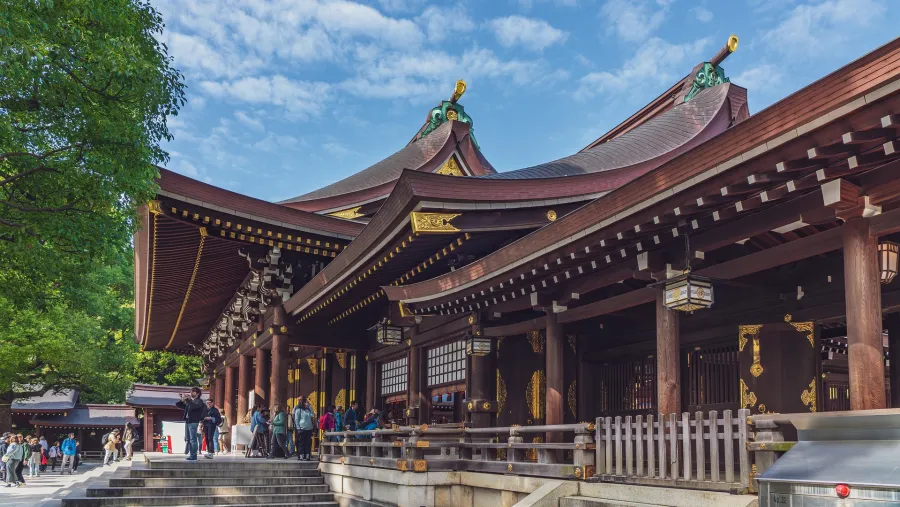
Meiji Shrine
A train to Harajuku, then a walk through the forested approach — the shift from city noise to quiet under the trees happens almost instantly.
Takeshita Street
Harajuku's youth-fashion street, and a sharp, almost jarring contrast to the shrine's calm just minutes away.
Evening
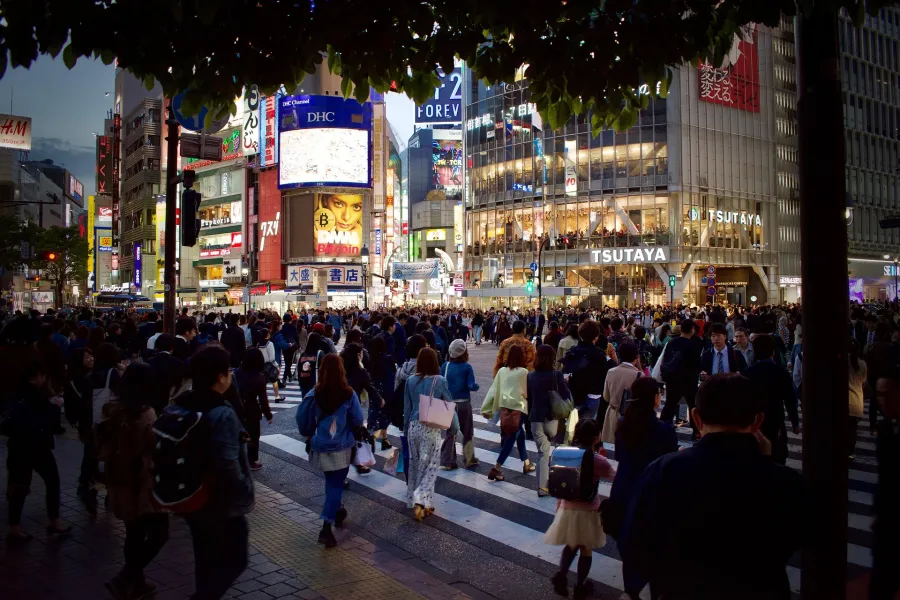
Shibuya Crossing
Finish here after dark, when the neon really takes over the streets around it — the crossing itself is busy at any hour, but the atmosphere is best at night.
Practical tips
- •Tokyo's districts are genuinely far apart — this route uses the train for the longer hops between Asakusa, the centre, and Shibuya rather than pretending you can walk all of it.
- •Trains stop running around midnight; plan your last leg of the night with that firmly in mind.
- •A Suica or Pasmo IC card makes every transfer between walking sections fast and cash-free — get one before you need it.
- •A small bow and a quiet voice at shrines and temples is appreciated even from a first-time visitor still figuring out the etiquette.
Common questions
Is Tokyo a walkable city?
Each district is very walkable on its own, but the city as a whole is too spread out to walk between neighbourhoods — trains are the standard, expected way to link one walkable area to the next.
How do you get between Asakusa and Shibuya?
Most directly the Ginza Line with a transfer, or the JR Yamanote Line via Ueno — roughly 30–40 minutes by train, and not realistically something you'd walk in one go.
What's the best time of day to see Shibuya Crossing?
After dark, once the surrounding neon is fully lit. The crossing itself never really empties out, but the atmosphere at night is what people actually mean when they talk about it.
More general questions about Traveller? See the full FAQ →
Wondering whether a self-guided route, a paid tour, or AI planning is the right call for Tokyo? Compare the options →
Want this itinerary tuned to your exact day?
Traveller's AI builds a personalized route for Tokyo — your time window, budget, and vibe.
Create your free route →More city guides