
By the Traveller team · Updated August 2026
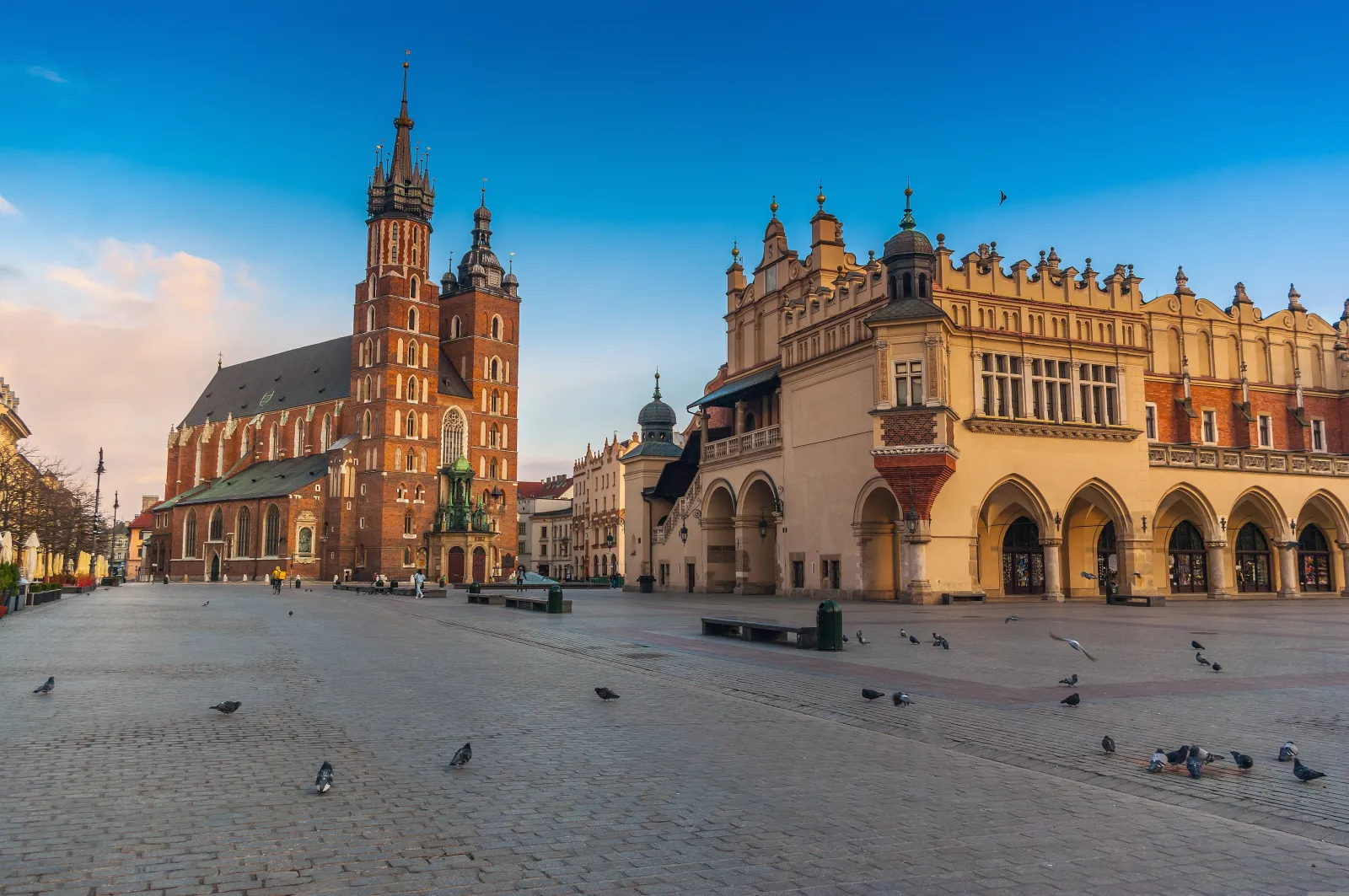
Krakow is the easiest full day of walking in this site's Central Europe cluster — the old town is compact, flat, and almost entirely closed to cars, a different physical category from Budapest's two-sided sprawl or Prague's steep Petřín climb. The day follows the Royal Route itself, the literal path Polish kings walked to their coronation: in through the Barbican and St. Florian's Gate, across the Main Market Square — one of the largest medieval squares still standing in Europe — and up the short climb to Wawel Castle. Kazimierz, the historic Jewish Quarter, is the deliberate tonal shift for the afternoon: quieter, more melancholy in places, built for slow wandering rather than a checklist. One honest note up front — Auschwitz-Birkenau is a common half-day add-on from Krakow, but it isn't part of this walking route. It deserves its own day, not a rushed afternoon.
Why walk Krakow?
- The Main Market Square is one of the largest medieval town squares still standing in Europe — walking across it, not just photographing it, is the point.
- The Royal Route from the Barbican to Wawel Hill is a literal historic processional path — following it on foot means walking the same line Polish kings did on their way to be crowned.
- Kazimierz rewards slow, unhurried wandering rather than a checklist — layered synagogues, cafés, and street art sit close together with no single obvious "main sight."
- The whole route is flat and pedestrian-first, making Krakow one of the physically easiest days in the Central Europe cluster — no Budapest hills, no Prague climb.
A one-day itinerary
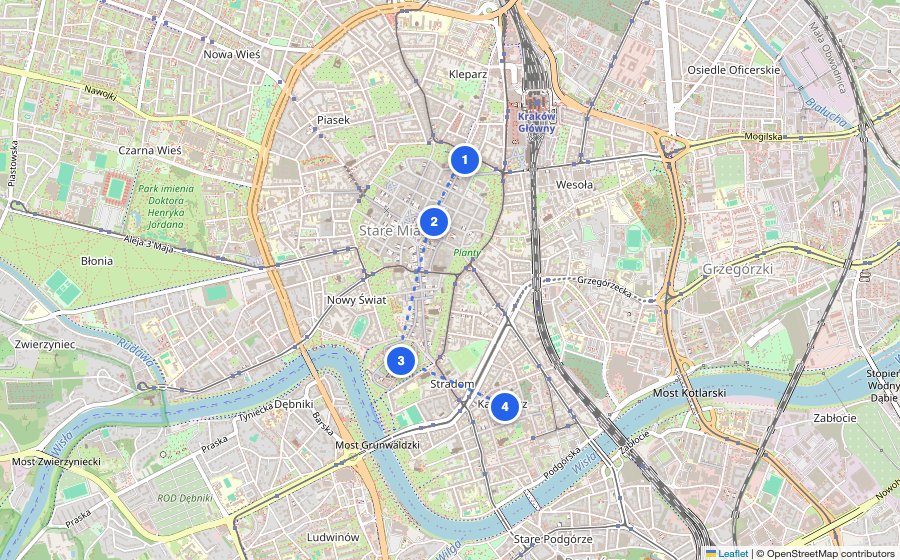
Morning
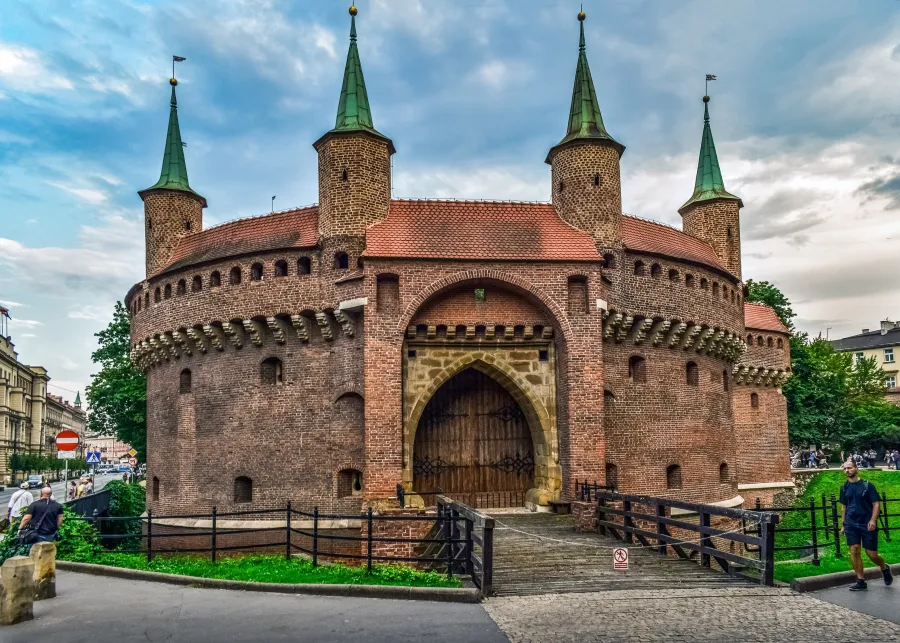
Barbican & St. Florian's Gate
Start at the historic city gate and walk the first stretch of the Royal Route while the square is still quiet.
Main Market Square (Cloth Hall, St. Mary's Basilica)
One of Europe's largest medieval squares — cross it slowly, don't just skirt the edge for photos.
Midday
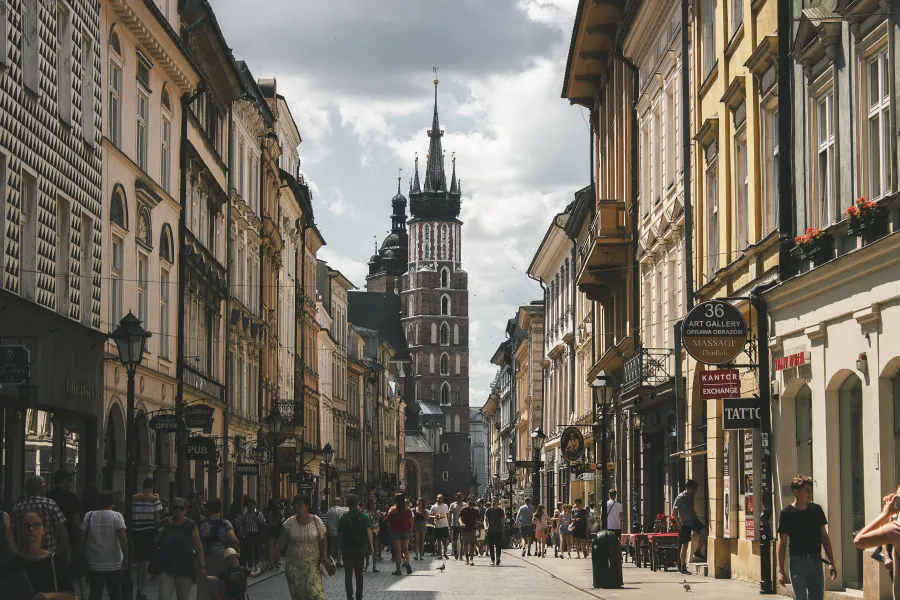
Royal Route via Grodzka Street
The historic coronation path continues south toward Wawel — narrow, arcaded, and easy to follow on foot.
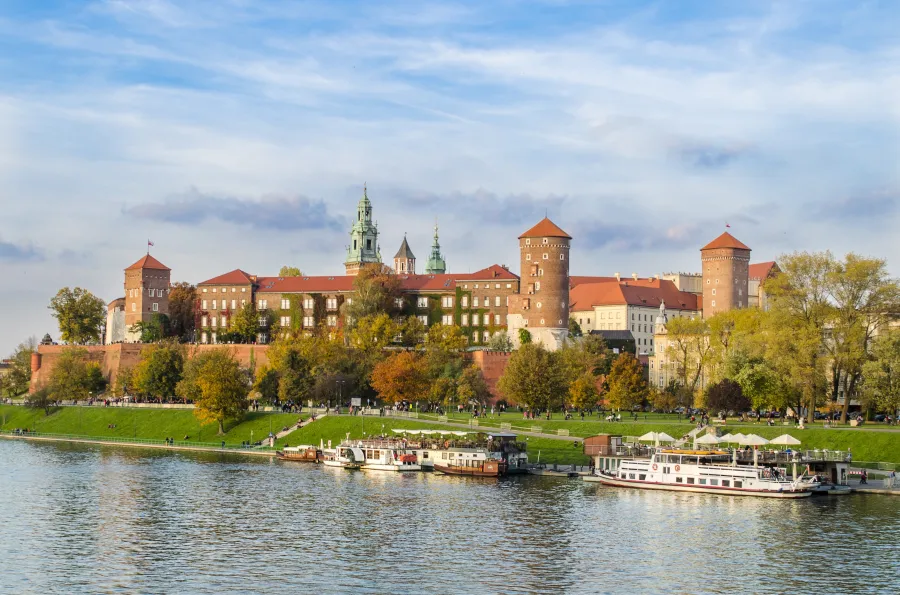
Wawel Hill (Castle courtyard & cathedral exterior)
The day's one real climb, and a short one by Prague or Lisbon standards.
Afternoon
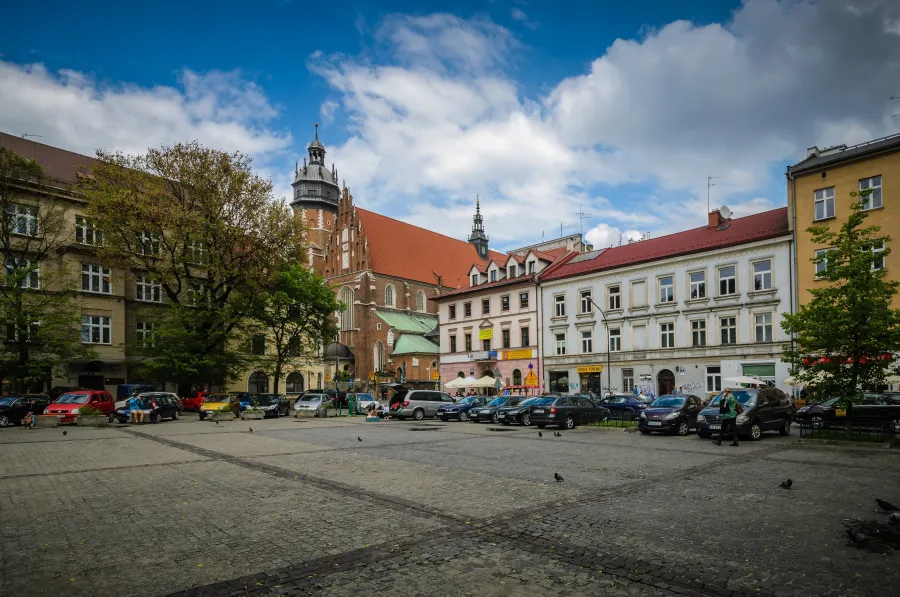
Kazimierz (Szeroka Street synagogues, Plac Nowy)
The tonal shift — slower, quieter, and food-focused; the zapiekanki stalls at Plac Nowy are a genuine local specialty worth stopping for.
Evening
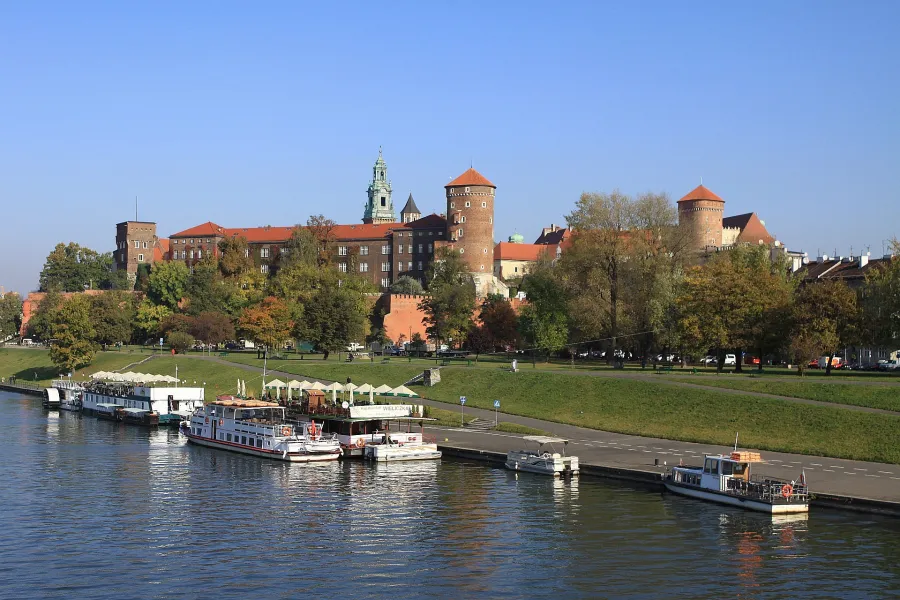
Podgórze / Vistula riverside walk (or a Kazimierz dinner)
Keep the close understated — a quiet river walk suits the afternoon's register better than another big monument.
Practical tips
- •Church visiting hours can be restrictive around Mass times, especially at St. Mary's Basilica — check before planning your walk around the interior.
- •The old town's cobblestones are as uneven as Prague's — supportive shoes matter here too.
- •Trams require a validated ticket, the same rule as the rest of the Central Europe cluster — inspectors do check.
- •Auschwitz-Birkenau is a common day-trip question from Krakow — it's real, but treat it as its own separate day, booked ahead, not a bolt-on to this walk.
Common questions
Can you see Krakow in a day on foot?
Yes — Krakow's old town is one of the most compact and flat in the Central Europe cluster, genuinely walkable end-to-end in a single day without needing transit.
Is Krakow a walkable city?
Very. The Royal Route and Kazimierz are both flat and pedestrianized, with only the short Wawel Hill climb breaking up an otherwise easy day on foot.
Can you visit Auschwitz from Krakow as a day trip?
Yes, and many visitors do — but it's a bus or train trip of its own, not a walk, and deserves a separate day rather than being squeezed into an afternoon.
More general questions about Traveller? See the full FAQ →
Wondering whether a self-guided route, a paid tour, or AI planning is the right call for Krakow? Compare the options →
Want this itinerary tuned to your exact day?
Traveller's AI builds a personalized route for Krakow — your time window, budget, and vibe.
Create your free route →You might also like
More city guides