

By the Traveller team · Updated August 2026
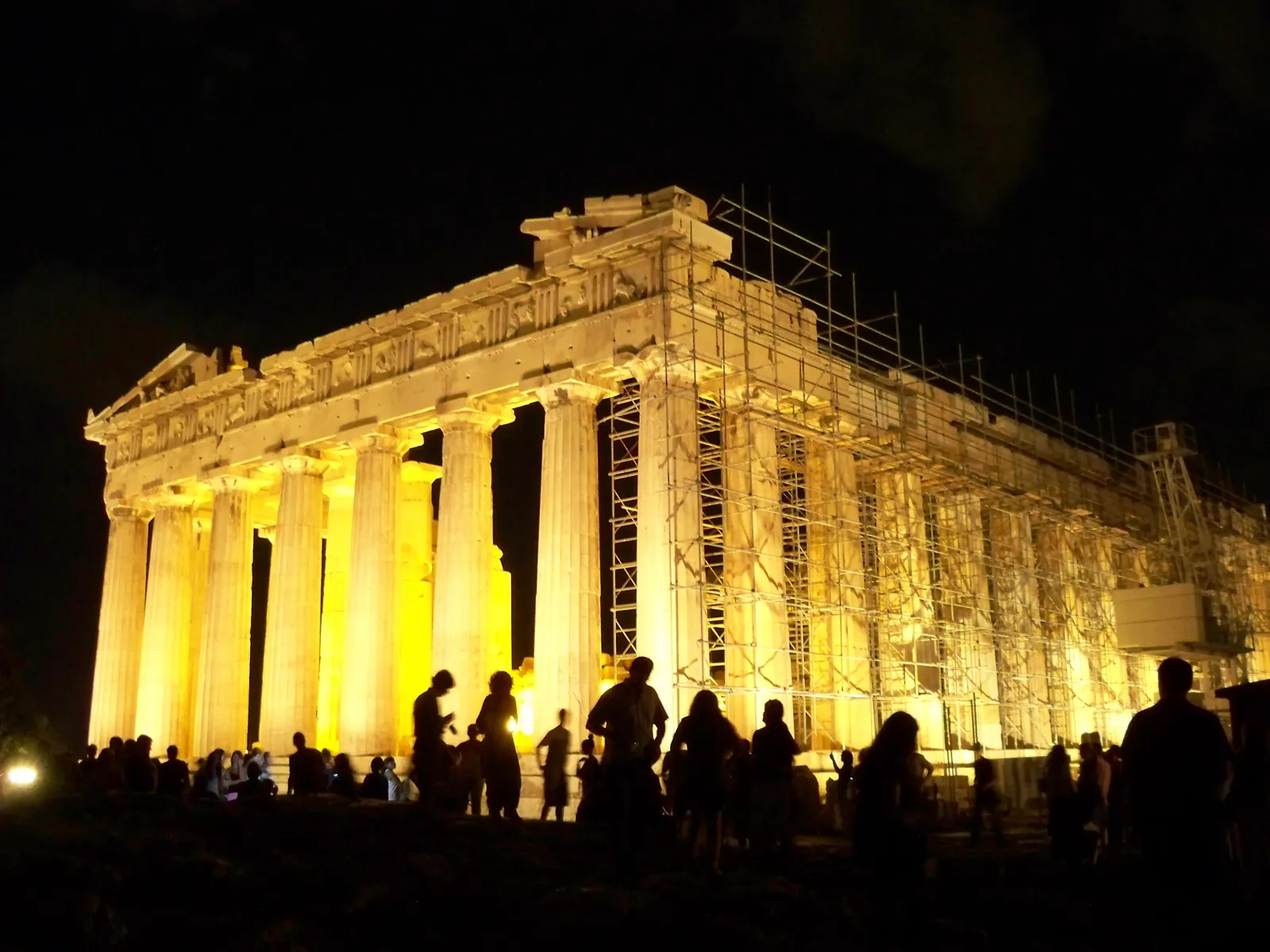
Athens solves the orientation problem Rome never quite does: instead of ancient sites scattered across the city, everything here organizes around one dominant, always-visible landmark — the Acropolis. If you can see it, you know which way is which. The day climbs it early, before the heat and the tour groups build, the same discipline this site uses for Rome and Bangkok, then walks down through the ancient agora at midday — a rare case where the single most famous sight and several lesser-known ones share one ticket and one continuous walk. Plaka's pedestrian lanes fill the afternoon with slower, more village-like wandering, and the day ends at Lycabettus Hill or a Plaka rooftop bar for the floodlit Acropolis view after dark. Where Rome layers three thousand years across a sprawling city, Athens stacks its history under one hill — a genuinely different shape of day, not a smaller version of the same idea.
Why walk Athens?
- The Acropolis is visible from most of central Athens, making this one of the easiest cities on this site to self-navigate by landmark alone, no map required.
- The ancient agora and the Acropolis sit inside one walkable archaeological park — a rare case where the single most famous sight and several lesser-known ones share one ticket and one continuous walk.
- Plaka's pedestrian lanes beneath the Acropolis are built for slow wandering, similar in spirit to Rome's centro storico but with a more village-like, low-rise scale.
- Lycabettus Hill (or a Plaka rooftop bar) gives a free or low-cost sunset view of the floodlit Acropolis — one of the more striking single images on this site.
A one-day itinerary
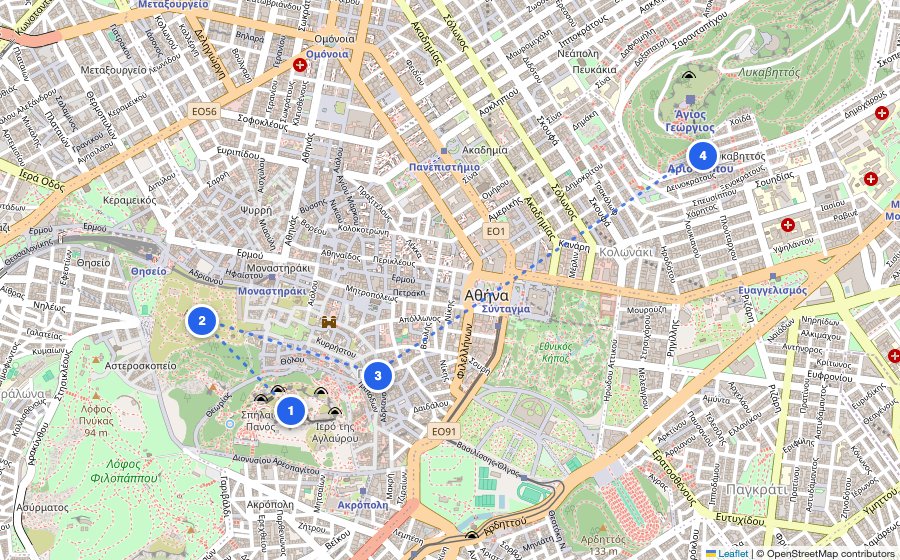
Morning

Acropolis & Parthenon
Go at opening, the same early-start discipline as Rome and Bangkok, before the heat and tour groups build.
Midday

Ancient Agora + Areopagus Hill
Continue the archaeological park walk downhill — a quieter counterpoint to the Acropolis crowds.
Afternoon

Plaka & Anafiotika
The day's wandering-first stretch — Anafiotika, a small whitewashed, almost Cycladic-feeling quarter tucked under the Acropolis's north slope, is easy to miss and worth actively seeking out.
Evening
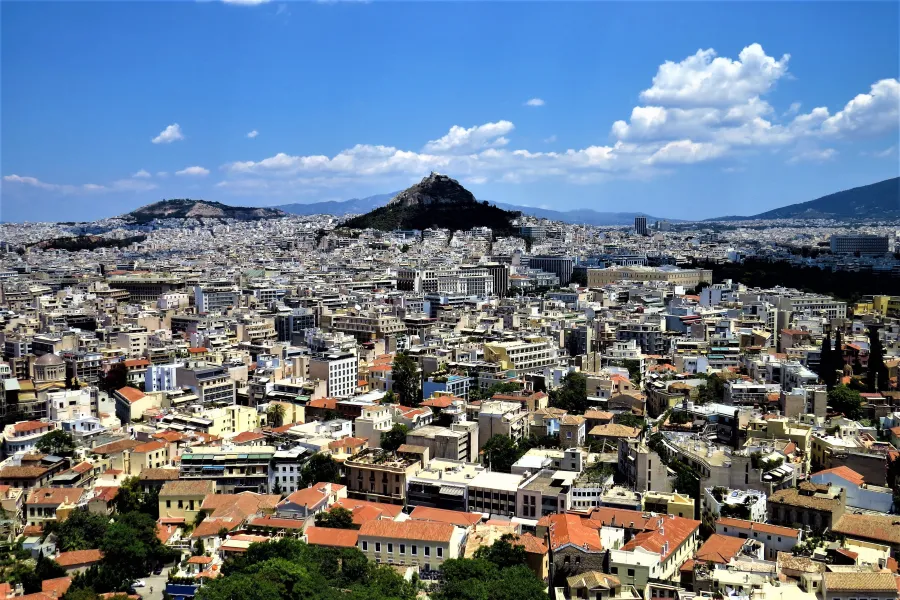
Lycabettus Hill climb (or a Plaka rooftop bar)
The floodlit Acropolis view at dusk — the rooftop option is the honest lower-effort alternative.
Practical tips
- •Heat is a real constraint here, the same early-start discipline as Bangkok and Rome — plan around it, not through it.
- •The marble site pathways are worn smooth and genuinely slippery — supportive shoes matter as much here as Rome's cobblestones.
- •The combined archaeological-site ticket covers the Acropolis, the Agora, and several other sites together — worth buying once rather than per-site.
- •A shaded midday break is sensible in summer, the same framing this site uses for Rome and Bangkok.
Common questions
Can you see Athens in a day on foot?
Yes — the Acropolis, the Agora, and Plaka all sit close together and connect on foot comfortably within a day.
Is Athens a walkable city?
Very, around the historic core — the Acropolis and Plaka are compact and pedestrian-friendly, though the wider modern city sprawls further than a single day covers.
What's the best time of day to visit the Acropolis?
Early morning, right at opening — the same answer this site gives for Rome's Colosseum and Bangkok's temples: go before the heat and the crowds arrive.
More general questions about Traveller? See the full FAQ →
Wondering whether a self-guided route, a paid tour, or AI planning is the right call for Athens? Compare the options →
Want this itinerary tuned to your exact day?
Traveller's AI builds a personalized route for Athens — your time window, budget, and vibe.
Create your free route →You might also like